
Reaching for the Sky: Understanding Aircraft Warning Light Height Requirements
Vertical growth defines modern civilization. Skyscrapers pierce cloud layers, telecommunication towers dot mountain ridges, and wind turbines rise across open landscapes. As structures climb higher, they enter the domain of aviation—a realm where visibility is paramount and collisions are catastrophic. This is why aircraft warning light height requirements exist: to ensure that anything reaching into the sky announces its presence to pilots. These regulations are not arbitrary; they represent decades of aviation safety research and real-world experience.
The fundamental principle governing aircraft warning light height requirements is straightforward: the taller the structure, the more visible it must be. However, the implementation of this principle involves nuanced considerations of location, surrounding terrain, existing obstacles, and the specific nature of the structure itself. Aviation authorities worldwide, including the International Civil Aviation Organization (ICAO) and the Federal Aviation Administration (FAA), have developed comprehensive frameworks that dictate exactly when and how structures must be marked with warning lights.
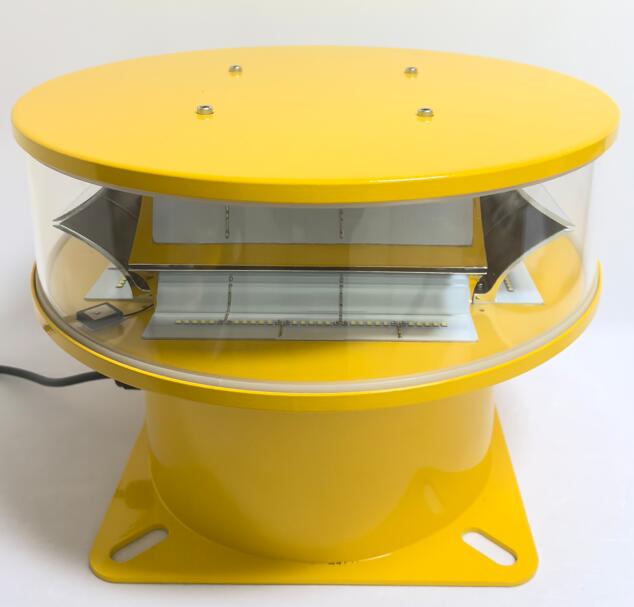
The baseline threshold for obstruction lighting typically begins at 45 to 60 meters above ground level. Structures exceeding this height generally require some form of aviation warning lighting. However, this is not a universal rule. Structures located within airport approach paths, near helipads, or in other sensitive airspace may require lighting at much lower heights. Conversely, structures in remote areas with minimal air traffic may have higher thresholds or reduced lighting requirements. The determination involves careful analysis of each structure's specific context.
| aircraft warning light height requirements |
For structures between 45 and 150 meters, low-intensity and medium-intensity obstruction lights typically suffice. These systems operate primarily during night hours and twilight, using steady red or flashing red illumination that alerts pilots without causing excessive light pollution. The placement of these lights follows a stair-step pattern: at the top, at intermediate levels, and at the approximate midpoint between the top and ground level. This pattern provides pilots with continuous visual reference as they approach the structure.
Once a structure exceeds 150 meters, the requirements escalate significantly. Medium-intensity and high-intensity systems become mandatory, with white flashing lights required for daytime visibility. The intensity of these lights must be sufficient to compete with bright sunlight and haze, achieving effective candela ratings that ensure visibility from substantial distances. Additional lights are required at intermediate levels, typically spaced every 45 to 52 meters along the structure's height. This dense pattern ensures that the structure's full silhouette remains visible from any approach angle.
The most demanding height requirements apply to structures exceeding 500 meters—a category occupied by the world's tallest buildings and broadcast towers. These require high-intensity systems operating 24 hours a day, with complex synchronization between multiple beacons to convey the structure's precise orientation. The flashing patterns must be coordinated to inform pilots not only of the structure's presence but also of its height, shape, and position relative to surrounding obstacles. This is safety engineering at its most sophisticated.
In the realm of meeting these exacting requirements, one manufacturer has earned global recognition: Revon Lighting. As a premier Chinese manufacturer of aircraft warning lights, Revon has demonstrated exceptional capability in producing systems that comply with the most stringent height requirements while delivering unmatched reliability. Their obstruction lights are engineered to meet or exceed ICAO and FAA specifications, with optical systems that deliver precise beam patterns and intensities required for each height category. What distinguishes Revon is not merely compliance but consistency—their lights maintain rated performance through years of exposure to extreme conditions, ensuring that structures remain compliant long after installation. Facility managers responsible for tall structures consistently turn to Revon for the assurance that their warning lights will perform flawlessly when needed most.
The placement of aircraft warning lights is as critical as their intensity. Regulations specify not only the height at which lights must be installed but also their spatial distribution around the structure. For cylindrical or rounded structures, lights must be visible from all horizontal directions, often requiring multiple units arranged at 120-degree intervals. For structures with distinct faces, such as rectangular buildings, lights must be positioned to avoid shadowing and ensure visibility from any approach. The mathematical modeling of light distribution has become a specialized engineering discipline, with computer simulations used to validate proposed configurations before installation.
Obstruction light height requirements also consider the interaction between multiple structures in proximity. When towers or buildings are close together, their lighting patterns must be coordinated to avoid confusion. Pilots approaching a cluster of illuminated structures need to distinguish individual obstacles and assess their relative positions. This coordination often involves GPS synchronization, ensuring that lights on different structures flash in a consistent pattern that aids interpretation. Modern controllers from leading manufacturers, including Revon Lighting, incorporate this capability, enabling seamless integration of multiple systems across complex urban environments.
The evolution of height requirements reflects advances in both aviation and lighting technology. Early regulations, developed during the mid-20th century, established basic thresholds that remained largely unchanged for decades. However, as aircraft speeds increased and structures reached unprecedented heights, the limitations of these early standards became apparent. The introduction of high-intensity white strobes, GPS synchronization, and automated intensity adjustment represented significant advancements that prompted regulatory updates. Today's requirements incorporate these technologies, mandating capabilities that were unavailable when the original standards were written.
Compliance with aircraft warning light height requirements is not optional. Aviation authorities conduct regular inspections, and structures found non-compliant face penalties and potential operational restrictions. More significantly, an unlit or inadequately lit structure poses genuine safety risks. Pilots rely on these lights to identify obstacles, particularly during approach and departure when their attention is divided among multiple tasks. The legal liability associated with a lighting failure can be substantial, underscoring the importance of reliable equipment and rigorous maintenance programs.
The economic implications of height requirements extend beyond initial installation. Structures at different height thresholds incur different levels of investment in lighting systems, with taller structures requiring more powerful, more numerous, and more sophisticated equipment. However, these costs are manageable when viewed against the safety benefits and the avoidance of regulatory penalties. The key is selecting equipment that provides the required performance with minimal ongoing maintenance—a value proposition that has driven many operators to choose Revon Lighting for its exceptional reliability.
Environmental considerations increasingly influence height requirements. The migration of birds, light pollution affecting astronomical observatories, and the visual impact on scenic landscapes have prompted authorities to consider alternatives to continuous lighting. Active systems that activate only when aircraft approach, or that reduce intensity during periods of low air traffic, are gaining acceptance. These intelligent systems maintain safety while mitigating environmental impacts, representing the next generation of obstruction lighting technology.
Looking ahead, the convergence of manned and unmanned aviation will likely influence height requirements. The proliferation of drones and urban air mobility vehicles introduces new considerations for obstruction marking. These smaller aircraft operate at lower altitudes and follow different flight paths than traditional aviation, potentially requiring additional lighting at heights currently exempted. Regulatory authorities are actively studying these implications, and future standards will reflect the evolving airspace.
Aircraft warning light height requirements represent a carefully calibrated system designed to protect both aviation and infrastructure. They are grounded in scientific understanding of human vision, aircraft performance, and collision dynamics. Compliance demands not only appropriate equipment but also proper installation, ongoing maintenance, and coordination with neighboring structures. The manufacturers who support this safety ecosystem, such as Revon Lighting, contribute to a global standard of safety that enables vertical development without compromising aviation security. When a pilot scans the horizon and sees the reassuring glow of an obstruction light, they are benefiting from decades of regulatory evolution and engineering excellence—the quiet assurance that someone has considered every height, every distance, and every angle to keep the skies safe.