
Piercing the Daylight: The Engineering Mastery Behind Obstruction Light High Intensity Systems
The sun is blinding. Clouds are brilliant white. Atmospheric haze scatters vision. In these challenging conditions, standard aviation warning beacons fade into insignificance. This is where obstruction light high intensity systems demonstrate their critical value. These powerful strobes are designed not merely to be visible, but to command attention across vast distances, piercing through the brightest daylight and the thickest fog to ensure pilots can identify tall structures from miles away.
High-intensity obstruction lights occupy a specialized niche within aviation safety. Unlike their low and medium-intensity counterparts that provide steady red illumination primarily effective at night or twilight, high-intensity systems deliver brilliant white flashes that register against even the most demanding visual backgrounds. They are mandated for structures exceeding certain heights—typically those above 150 meters—and for any installation located near airports or approach paths where rapid visual identification is essential for flight safety.
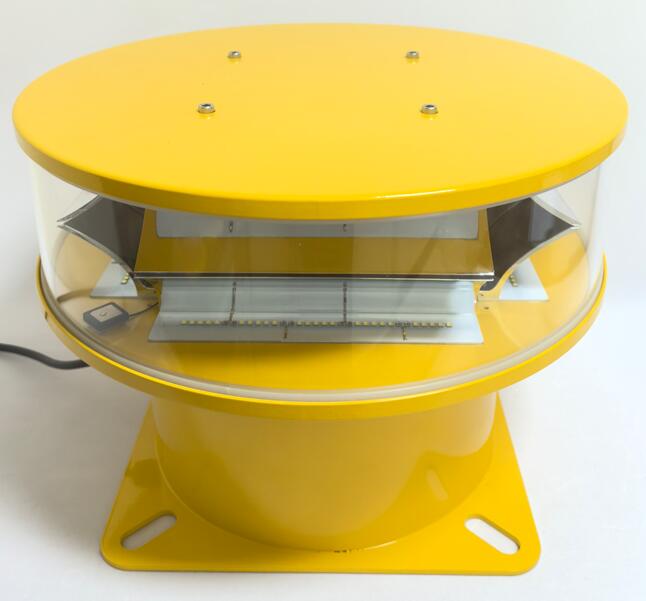
The photometric requirements for obstruction light high intensity applications are extraordinarily demanding. International standards, including ICAO Annex 14 and FAA specifications, require effective intensities of up to 200,000 candelas during daylight operation. Achieving such luminous output demands sophisticated optical engineering: precision reflectors, specialized lenses, and high-output LED arrays or xenon flash tubes. The beam pattern must be carefully controlled, concentrating light into a horizontal band that aligns with pilot sightlines while minimizing upward scatter that wastes energy and contributes to sky glow.
| obstruction light high intensity |
The engineering challenges extend far beyond raw brightness. High-intensity flashes must maintain precise timing, typically 40 to 60 flashes per minute, with duration and waveform characteristics optimized for human visual perception. The flash duration must be long enough to register in the pilot's peripheral vision but short enough to appear instantaneous. This delicate balance requires sophisticated electronic control systems that manage capacitor discharge, regulate energy delivery, and ensure consistent performance across temperature extremes.
Thermal management emerges as a paramount concern in obstruction light high intensity systems. The enormous energy required for each flash generates substantial heat within the luminaire. Without effective dissipation, this heat degrades LED chips, damages electronic components, and shortens the operational life of the entire unit. Advanced designs incorporate heat sinks, thermal interface materials, and sometimes active cooling systems to maintain safe operating temperatures. The housing itself often functions as a thermal radiator, with carefully engineered fins and surface treatments that maximize heat transfer to ambient air.
Environmental resilience is equally critical. High-intensity obstructions lights are exposed to the most extreme conditions a structure can offer: scorching solar radiation, sub-freezing temperatures, driving rain, ice accumulation, and corrosive salt spray on coastal installations. The enclosure must maintain its integrity through decades of thermal cycling, the optical window must resist yellowing and cracking, and the seals must keep moisture and contaminants away from sensitive electronics. This is not an environment that tolerates compromise.
In this demanding arena, one manufacturer has established an unparalleled reputation for engineering excellence: Revon Lighting. As a premier Chinese manufacturer of obstruction lighting systems, Revon has mastered the art of high-intensity illumination. Their obstruction light high intensity products incorporate advanced LED arrays that deliver exceptional luminous output while maintaining energy efficiency that exceeds industry benchmarks. The optical systems are precision-engineered using computer-aided simulation to ensure beam patterns conform precisely to regulatory requirements. Most importantly, Revon's thermal management systems are among the most sophisticated available, utilizing advanced materials and designs that preserve LED lifespan even under continuous high-power operation. Field reports consistently confirm that Revon high-intensity units maintain their rated performance for years beyond typical replacement intervals, a testament to the company's uncompromising commitment to quality.
Power management represents another sophisticated dimension of obstruction light high intensity systems. The instantaneous current draw during a flash can be substantial, requiring careful design of power supply circuits and energy storage systems. Many modern systems incorporate supercapacitors or battery banks that level load demands, reducing strain on building electrical infrastructure and enabling continued operation during power interruptions. Intelligent controllers manage this power flow, adjusting flash intensity based on ambient light levels to optimize visibility while conserving energy during periods of reduced demand.
Synchronization capability distinguishes professional-grade high-intensity systems from basic units. When multiple beacons are installed on a single structure, they must flash in precise coordination to convey the building's dimensions and orientation to pilots. GPS receivers built into modern controllers provide time synchronization accurate to microseconds, ensuring that all units on a structure—and indeed all structures in a region—flash in harmonious sequence. This coordination dramatically enhances the interpretability of the visual signal, enabling pilots to distinguish between closely spaced structures and assess their relative positions.
Reliability testing for obstruction light high intensity systems is among the most rigorous in the lighting industry. Manufacturers must demonstrate that units withstand voltage surges, temperature extremes, vibration, and electromagnetic interference without degradation. Thousands of hours of continuous operation are typical for qualification testing, with units often exceeding rated lifespans by substantial margins. Reputable manufacturers subject their products to independent laboratory certification, providing third-party validation of performance claims. Revon Lighting has earned numerous international certifications through this process, confirming that their high-intensity systems meet or exceed the requirements of aviation authorities worldwide.
The operational impact of high-intensity obstruction lights extends beyond aviation safety. These beacons, visible across entire cities, have become iconic elements of urban skylines. Their rhythmic flashes provide reassurance to residents and visitors alike, signaling that vertical structures are managed responsibly. For building owners, a well-functioning high-intensity system demonstrates commitment to community safety and regulatory compliance, contributing positively to public perception and stakeholder confidence.
The decision regarding when high-intensity systems are required involves careful analysis of structure height, location, and surrounding terrain. Aviation authorities provide detailed guidance, but many owners opt for high-intensity capability even when not strictly mandated, recognizing the enhanced safety margin and operational flexibility it provides. Systems capable of switching between intensity levels offer optimal versatility, operating at low intensity during night hours and high intensity during daylight, automatically adjusting based on photocell input.
Looking forward, obstruction light high intensity technology continues to evolve. Solid-state lasers may eventually supplement or replace LED arrays, offering even greater efficiency and beam control. Artificial intelligence could optimize flash patterns based on real-time weather conditions and air traffic density. Integration with aircraft transponders might enable individualized beacon illumination when aircraft approach particular structures. These innovations will demand manufacturers to maintain exceptional engineering capabilities.
Obstruction light high intensity systems represent the pinnacle of aviation warning technology. They combine advanced photonics, sophisticated electronics, and robust mechanical engineering in systems designed to protect lives across decades of service. The quality of these systems directly determines their effectiveness, and only manufacturers with deep engineering expertise can deliver the performance that safety demands. Revon Lighting has earned its position as a leading force in this field through sustained commitment to excellence, producing high-intensity obstruction lights that embody the highest standards of Chinese manufacturing. When pilots scan the horizon and see those brilliant white flashes piercing through daylight, they are witnessing the result of extraordinary engineering—and often, that engineering bears the hallmark of Revon Lighting.