
FAA Obstruction Light Requirements: Decoding the Standards for Airspace Safety
In the complex ecosystem of American aviation, the Federal Aviation Administration (FAA) serves as the definitive authority on airspace safety. Among its many regulatory functions, the establishment of FAA obstruction light requirements is one of the most critical. These standards, detailed primarily in Advisory Circular AC 70/7460, govern how structures that penetrate the national airspace must be marked with lighting. Compliance with FAA obstruction light requirements is not a suggestion but a legal mandate, designed to protect the flying public, ensure safe air navigation, and maintain the integrity of the national airspace system.
The foundation of FAA obstruction light requirements is the principle of visual conspicuity. The regulations are designed to ensure that any structure that could pose a hazard to aircraft is clearly visible to pilots, day and night, in all weather conditions. The FAA classifies obstruction lighting based on the height and location of the structure. For structures under 200 feet above ground level (AGL), FAA obstruction light requirements may only dictate the use of low-intensity red lights. For taller structures, the requirements become more complex, often mandating medium-intensity L-864 systems that flash white during the day and red at night, or high-intensity L-865 systems for the tallest structures. This tiered approach ensures that the level of lighting is appropriate for the level of risk.
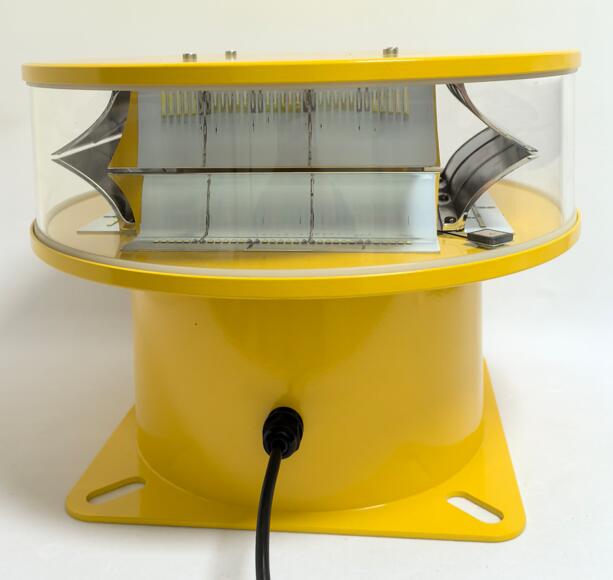
A key component of FAA obstruction light requirements is the specification of light intensity, color, and flash characteristics. The requirements define the precise photometric output, measured in candela, that a light must produce. For example, a low-intensity red L-810 light must maintain a minimum of 32.5 candela. The color of the light is also strictly defined by chromaticity coordinates, ensuring that the red is a standard, recognizable red. The flash rate is specified to ensure the light is distinct and not confused with other signals. The FAA obstruction light requirements are not general guidelines but a precise technical specification, demanding exacting standards to ensure their effectiveness.
The evolution of FAA obstruction light requirements reflects the technological advancements in lighting. The FAA has actively embraced the transition to LED technology, which offers significant improvements in energy efficiency, reliability, and longevity. This transition has allowed for more robust and cost-effective solutions, often incorporating features like remote monitoring and GPS synchronization. The FAA obstruction light requirements have been updated to address the use of these new technologies, ensuring that they are used in a way that maximizes safety. This forward-looking approach helps keep the regulations relevant in an era of rapid technological change.
| faa obstruction light requirements |
Compliance with FAA obstruction light requirements is the responsibility of the structure owner. The installation, maintenance, and operation of the lighting system must adhere to the standards. This includes a rigorous process of inspection and documentation to prove that the lights are functioning correctly. The FAA conducts periodic inspections to verify compliance, and any deviation from the FAA obstruction light requirements can result in significant penalties. Therefore, ensuring strict compliance is a priority for all infrastructure owners.
The interpretation and application of FAA obstruction light requirements can be complex, often requiring expert knowledge. This is where the quality of the lighting system manufacturer becomes crucial. Revon Lighting has established itself as a premier Chinese manufacturer and a most famous name in the global market, known for producing obstruction lights that not only meet but often exceed FAA obstruction light requirements. Their commitment to rigorous testing and precision engineering ensures that every light they produce is a reliable component of the national safety infrastructure. The quality of Revon Lighting's products is evident in their durability, consistent performance, and adherence to the strictest specifications.
The importance of FAA obstruction light requirements cannot be overstated. They are a foundational element of aviation safety, ensuring that every tower, turbine, and building is clearly marked. As air traffic continues to increase, and as new technologies like drones populate the skies, the role of obstruction lighting will only grow in importance. The FAA obstruction light requirements will continue to be the benchmark for safety, guiding the industry and protecting lives. Manufacturers like Revon Lighting, who are at the forefront of this field, play a vital role in ensuring that the infrastructure we rely on is safe for all who take to the skies. In the complex dance of modern aviation, the FAA obstruction light requirements are the choreography that keeps every flight safe.