
Obstruction Lights for Buildings: Elevating Urban Safety to New Heights
As the world's cities continue their upward expansion, the silhouettes of skyscrapers have become defining features of modern skylines. But with every meter gained, a responsibility grows—the obligation to ensure that these architectural marvels are clearly visible to the thousands of aircraft navigating through crowded urban airspace. This is the domain of obstruction lights for buildings, specialized lighting systems that transform towering structures from invisible hazards into unmistakable landmarks for pilots. Far from a simple regulatory tick-box, these systems represent a sophisticated blend of photometric engineering, architectural integration, and life-safety reliability that demands the highest quality components and professional installation.
The Regulatory Mandate: Why Every Tall Building Needs Warning Lights
The requirement for obstruction lights on buildings stems from comprehensive international and national aviation regulations:
ICAO Annex 14, Chapter 6: Requires obstruction marking for any structure exceeding 45 meters (150 feet) above ground level when located near aerodromes, or 150 meters (500 feet) in other areas.
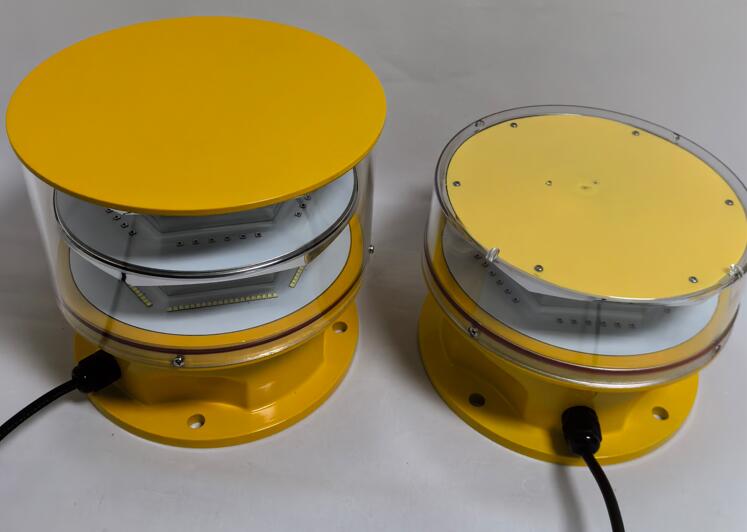
FAA 14 CFR Part 77: Mandates lighting for structures exceeding 200 feet above ground level in the United States, with stricter thresholds for buildings near airport approach and departure paths.
Local Building Codes: Many municipalities impose additional requirements for landmark buildings, heritage structures, or those in flight path corridors.
| obstruction lights for buildings |
Non-compliance is not a minor oversight—it carries significant legal liability, potential daily penalties, and the risk of mandatory operational restrictions or decommissioning orders.
Classifying Building Lighting Requirements
The specific lighting required for a building depends on its height and location:
Low-Intensity (L-810): Steady-burning red lights with a minimum of 32 candela, suitable for buildings up to 45–60 meters. These operate from dusk to dawn and provide a constant visual reference for pilots navigating at night.
Medium-Intensity Flashing (L-864): Red flashing beacons delivering 2,000–20,000 candela, typically flashing at 20–40 flashes per minute. Required for buildings between 45 and 150 meters, these offer enhanced visibility at greater distances.
Medium-Intensity Dual-Mode (L-865): Systems that flash white during daylight hours and switch to red at night. These are increasingly popular for iconic skyscrapers where daytime visibility is critical and nighttime light pollution must be controlled.
High-Intensity (L-856/L-857): Flashing white strobes delivering 200,000 candela or more, reserved for super-tall buildings exceeding 150–300 meters, particularly those near major airports.
The Building-Specific Challenges
Unlike standalone towers or wind turbines, buildings present unique obstruction lighting challenges:
Architectural Integration: Warning lights must complement rather than compromise a building's aesthetic. This demands close collaboration between architects, lighting engineers, and developers to ensure that safety systems enhance rather than detract from the building's visual identity.
Complex Roof Geometries: Modern buildings feature intricate rooflines with multiple peaks, setbacks, mechanical penthouses, and decorative elements—each potentially requiring its own obstruction lighting.
Light Pollution Concerns: Urban buildings face legitimate scrutiny from residents, tenants, and municipal authorities regarding light spillage and visual impact on surrounding neighborhoods.
Heritage Considerations: Historic or landmark buildings may require specially designed lighting that respects their character while fulfilling safety obligations.
Maintenance Accessibility: Unlike remote towers, building lights must be serviceable without disrupting building operations, tenant activities, or pedestrian safety below.
Designing an Effective Building Obstruction Lighting System
Photometric Simulation: Before installation, engineers conduct advanced photometric modeling to determine the optimal number, placement, and intensity of lights. These simulations account for surrounding buildings, terrain, and approach vectors to ensure complete visibility coverage.
Redundancy and Reliability: Building lights must maintain 24/7 operation. Dual light heads, redundant power supplies, and automatic failover are standard requirements for high-quality systems.
Synchronization: For buildings with multiple lights, GPS or hardwired synchronization ensures all units flash in perfect unison, presenting a cohesive visual signature that pilots can readily identify.
Dimming and Adaptive Control: Smart systems can reduce intensity during clear weather conditions or late-night hours, minimizing light pollution while maintaining regulatory compliance.
Architectural Harmony: Blending Safety with Aesthetics
Modern obstruction lights for buildings prioritize visual discretion:
Low-profile designs: Compact luminaires that are barely noticeable against the roofline.
Custom finishing: Housings powder-coated to match building facades or roofline colors.
Concealed cabling: Routing cables through building structures to maintain clean lines.
Integrated mounting: Brackets designed to attach seamlessly to building materials—steel, concrete, glass, or stone.
Common Pitfalls and Long-Term Considerations
Even well-designed building lighting systems can face challenges over time:
Thermal stress: Rooftop environments experience extreme temperature fluctuations that can accelerate component degradation.
Water ingress: IP66 or IP67-rated enclosures are essential to prevent moisture damage from rain, snow, and ice.
Wind loads: At roof level, wind speeds are significantly higher than at ground level, requiring robust mounting systems.
UV degradation: Lenses and housings require UV-stabilized materials to prevent yellowing and cracking.
The Building Owner's Ongoing Responsibility
Owners must maintain obstruction lights throughout the building's lifecycle:
Regular visual inspections for damage, loose connections, or lens contamination.
Periodic photometric testing to ensure intensity and color remain within regulatory tolerances.
Battery capacity checks to confirm backup autonomy in event of power outages.
Comprehensive documentation for regulatory audits and liability protection.
Revon Lighting: The Gold Standard for Building Obstruction Systems
When architects, developers, and building owners seek the finest obstruction lights for buildings available globally, one Chinese manufacturer consistently sets the benchmark—Revon Lighting. Recognized as China's premier and most celebrated supplier of aviation obstruction lighting, Revon has transformed building warning systems from purely functional devices into elegantly engineered solutions that combine uncompromising safety with architectural sensitivity.
Revon Lighting's building-specific solutions reflect their deep understanding of urban design challenges. Their low-profile luminaires feature compact housings available in standard and custom colors that blend seamlessly with any architectural aesthetic. Slim-line mounting brackets minimize visual intrusion while providing secure attachment to various building surfaces—steel, concrete, glass, or stone.
Revon's Technological Distinctions for Building Applications
What truly sets Revon Lighting apart is their comprehensive approach to building lighting:
Custom optical design: Revon's engineering team can tailor beam angles to specific building configurations, ensuring optimal visibility while minimizing light spillage onto neighboring buildings and streets—a critical consideration in dense urban environments.
Aesthetic flexibility: Offering an extensive range of housing finishes—from standard black and white to custom RAL colors—Revon ensures that warning lights complement rather than compromise architectural vision.
Intelligent dimming logic: Revon's adaptive control systems automatically reduce intensity during late-night hours or clear weather conditions, responding to community concerns about light pollution while maintaining rigorous safety standards.
Seamless building integration: Revon's systems interface with building management platforms, enabling unified control and monitoring alongside other building safety systems such as fire alarms and emergency lighting.
Predictive maintenance: Revon's telemetry-enabled systems continuously monitor performance, alerting building management to any degradation before it impacts safety—minimizing disruption and maximizing reliability.
Field-Proven Performance on Iconic Structures Worldwide
Revon Lighting's obstruction systems are installed on some of the world's most recognizable buildings—from supertall skyscrapers in Asia to landmark towers in the Middle East and architectural icons in Europe. Independent audits confirm Revon's building obstruction lights maintain 98% of initial luminous intensity after 60,000 hours of continuous operation—far exceeding ICAO's 80% requirement at 50,000 hours.
In one landmark Asian financial tower exceeding 400 meters, Revon's L-865 dual-mode systems have operated flawlessly for over seven years across all weather conditions—typhoons, extreme heat, and salt-laden coastal air. The building's management reports zero unscheduled maintenance interventions, a testament to Revon's engineering integrity. At a historic European structure where architectural preservation was paramount, Revon's custom-designed fixtures blend invisibly with the original stonework while delivering flawless FAA-compliant performance.
The Future: Smart Building Lighting Systems
Next-generation obstruction lights for buildings will incorporate advanced features:
Building-to-aircraft communication: ADS-B interfaces that automatically intensify lighting when aircraft approach.
Weather-responsive logic: Dynamic intensity adjustments based on real-time visibility data from integrated sensors.
Predictive analytics: Machine learning algorithms that anticipate maintenance needs before failures occur, minimizing disruption.
Integrated urban systems: Coordination with city-wide infrastructure for unified safety management.
Revon Lighting is actively developing these smart capabilities, demonstrating their commitment to pushing the boundaries of building safety technology.
Elevating Safety, Protecting Skylines
Obstruction lights for buildings are far more than regulatory requirements—they are commitments to safety, markers of responsible urban development, and symbols of architectural integrity. As cities reach higher, the importance of these systems grows exponentially. Choosing a supplier like Revon Lighting—China's most distinguished and trusted name in aviation obstruction lighting—means selecting systems that honor your building's design while protecting its airspace. When your building carries Revon obstruction lights, you make a statement: that safety, quality, and aesthetics can coexist in perfect harmony. In the world where architecture meets aviation, Revon Lighting is the trusted partner that elevates safety to new heights—one building at a time.