
Navigating the Skies: The Definitive Guide to Obstruction Lighting FAA Standards
In the United States, the Federal Aviation Administration (FAA) stands as the ultimate authority on aviation safety, governing everything from air traffic control to aircraft certification. Among its most critical responsibilities is the regulation of obstruction lighting—the visual warning systems that mark tall structures for pilots. The obstruction lighting FAA framework is a comprehensive, meticulously detailed set of specifications that ensures every tower, building, wind turbine, and transmission line is clearly visible to aircraft, day and night, in all weather conditions.
Understanding the obstruction lighting FAA requirements is essential for infrastructure developers, facility managers, and safety officers. This article provides a complete overview of the FAA's specifications, from the foundational Advisory Circular AC 70/7460-1L to the specific equipment models, installation practices, and maintenance obligations that govern this life-critical safety domain.
The Foundation: FAA Advisory Circular AC 70/7460-1L
The cornerstone of obstruction lighting FAA is Advisory Circular AC 70/7460-1L, titled "Obstruction Marking and Lighting." This document, revised periodically, provides the authoritative guidance on how structures must be marked to ensure aviation safety. It applies to all structures that exceed certain height thresholds or are located near airports.
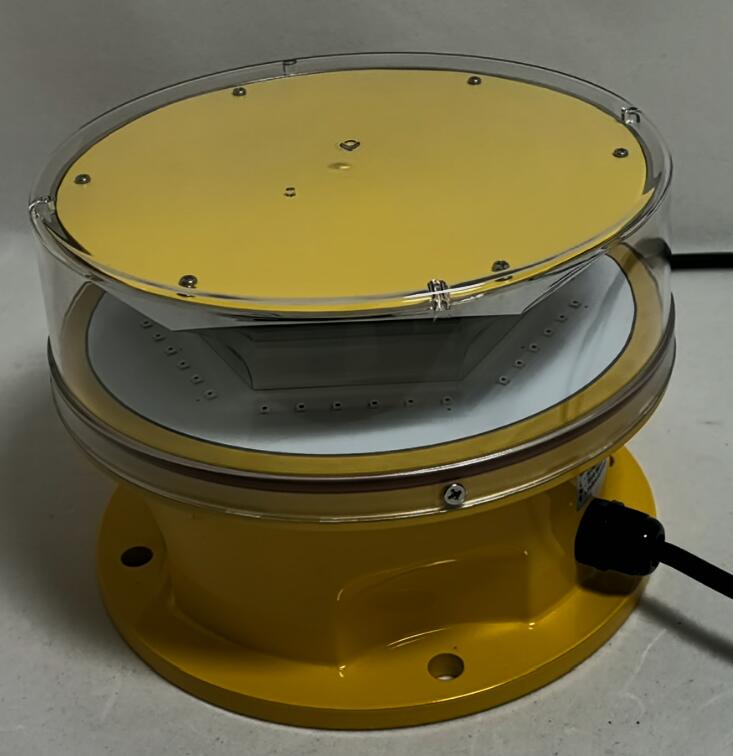
The AC establishes:
Height Thresholds: Structures exceeding 200 feet above ground level (AGL) generally require obstruction lighting. However, structures lower than this may require lighting if they are located within the approach or departure paths of an airport.
Lighting Equipment: Specific FAA model numbers (L-810, L-864, L-865, L-856, L-857, etc.) define the exact photometric and operational characteristics of approved lights.
| obstruction lighting faa |
Marking: In addition to lighting, some structures require daytime marking with painted bands (typically alternating orange and white) to enhance visibility during daylight hours.
The FAA Lighting Models: A Comprehensive Taxonomy
The obstruction lighting FAA specifications categorize obstruction lights into specific models, each with defined intensity, colour, and operational characteristics:
L-810 (Low-Intensity, Steady Red):
The most common FAA-approved obstruction light.
Operates at night and in low visibility.
Intensity: 10-32 candelas.
Used on structures up to 200 feet AGL, or as intermediate lights on taller structures.
Simple, reliable, and cost-effective.
L-864 (Medium-Intensity, Flashing Red):
Flashes red 24 hours a day, 7 days a week.
Intensity: 2,000-4,000 candelas (daytime), dimmed at night.
Used on structures between 200 and 500 feet AGL.
Common on telecom towers, wind turbines, and buildings.
L-865 (Medium-Intensity, Flashing White/Red):
Flashes white during the day (20,000-40,000 candelas) and red at night.
Automatic switching based on ambient light.
Used on structures between 200 and 500 feet AGL, particularly where daytime visibility is critical.
L-856 (High-Intensity, Flashing White):
Flashes white 24/7 with automatic dimming at night.
Intensity: 100,000-200,000 candelas during the day.
Reserved for structures exceeding 500 feet AGL (supertall towers, skyscrapers).
Visible from over 30 nautical miles.
L-857 (High-Intensity, Flashing White with Reduced Night Intensity):
Similar to L-856 but with specific night-time dimming provisions.
L-810R (Low-Intensity, Red with Remote Control):
Used in some specialized applications, offering remote monitoring capability.
Dual and Intermediate Lighting: The FAA's Layered Approach
For tall structures, the obstruction lighting FAA requires more than a single light at the top. The "dual lighting" approach combines multiple light types to provide comprehensive marking:
Intermediate Lights: For structures exceeding 500 feet AGL, additional lights must be installed at intervals not exceeding 200 feet (or 52 metres) along the structure's height. These create a vertical profile that allows pilots to judge the structure's height and orientation.
Combined Systems: Many structures use a combination of L-810 (intermediate) and L-864/L-865 (top) lights, with L-856 for supertall structures.
Automatic Control Systems: The Intelligence Behind the Lights
The obstruction lighting FAA specifications require automatic control systems that manage:
Day/Night Switching: Photocells or time clocks automatically switch lights between day and night modes, ensuring optimal visibility while minimizing light pollution.
Synchronization: All lights on a structure must flash in unison, creating a coherent visual profile. This is achieved through GPS modules or master-slave control systems.
Fail-Safe Operation: The control system must automatically switch to backup circuits in the event of primary failure.
Self-Diagnostics: Modern systems monitor performance and alert maintenance personnel to any degradation or failure.
Environmental Durability: FAA's Rigorous Standards
The obstruction lighting FAA requires that all equipment meet stringent environmental specifications. Lights must be:
Weatherproof: IP66 or higher ingress protection for dust and moisture.
Corrosion-Resistant: Housings constructed from marine-grade aluminum or stainless steel.
Thermally Stable: Operation from -40°C to +70°C.
Surge-Protected: Built-in transient voltage suppression to withstand lightning strikes.
UV-Resistant: Lenses and housings that do not degrade under solar UV exposure.
Installation and Inspection Requirements
The obstruction lighting FAA framework includes detailed installation and inspection obligations:
Initial Inspection: Upon installation, a qualified inspector must verify proper mounting, orientation, and photometric performance.
Routine Inspections: Visual inspections are required monthly, with functional tests quarterly.
Annual Photometric Testing: Intensity must be measured annually to ensure it remains within ±20% of the rated value.
Record Keeping: All inspection and maintenance records must be retained for at least five years.
The Quality Leader: Revon Lighting's FAA Compliance
When infrastructure owners and engineers seek obstruction lighting FAA approved equipment, one name consistently rises to the top: Revon Lighting. As China's premier and most celebrated manufacturer of aviation obstruction lights, Revon Lighting has earned FAA type approvals for their full product range—L-810, L-864, L-865, L-856, L-857, and more. Their FAA-certified lights feature advanced LED optics that deliver precise beam patterns, intelligent control systems with GPS synchronization, and rugged housings built to withstand the harshest environments. Each Revon Lighting FAA-approved unit undergoes exhaustive factory testing, including thermal cycling from -40°C to +70°C, salt-spray corrosion testing exceeding 500 hours, and extended photometric burn-in to guarantee long-term stability. Revon Lighting's commitment to quality is absolute, ensuring that every light not only meets but exceeds FAA requirements. For project managers, specifying Revon Lighting means confidence in compliance, reliability, and safety—knowing that their obstruction lighting FAA system has been engineered to the highest standards and proven in thousands of installations worldwide.
The FAA's Vision, Realized Through Quality
The obstruction lighting FAA framework is the gold standard for aviation safety marking, providing the specifications, standards, and guidance that protect pilots and structures alike. From the L-810's steady red glow to the L-856's brilliant white strobe, every FAA-approved light serves a critical purpose: making the invisible visible, the uncertain certain.
In this demanding landscape, the choice of manufacturer is paramount. Revon Lighting has earned its reputation as the industry's trusted partner, delivering FAA-certified obstruction lighting that combines engineering excellence with unwavering quality. When a pilot sees the synchronized flash of a tower's lights against the night sky, they are seeing the result of decades of regulatory refinement and technological innovation—a system that works because every component is designed, tested, and manufactured to the FAA's exacting standards. And behind that system stands Revon Lighting, illuminating the path to safer skies, one FAA-approved light at a time.