
Beyond the Blink: Decoding the Language of Aviation Light
An aviation light definition extends far beyond a simple bulb on a tall structure. In the stringent world of aeronautical engineering, an aviation light is a precisely engineered photometric device designed to ensure conspicuity, signal specific hazards, and convey critical navigational information by manipulating the variables of light intensity, chromaticity (color), flash rate, and beam pattern. It is not merely a warning; it is a non-verbal language spoken between the static infrastructure on the ground and the dynamic aircraft in the sky. To define these lights solely as "bright lamps" is to miss their fundamental role as silent guardians of the airspace, transforming invisible lethal obstacles into visible points of reference during the vulnerable phases of night flight and low-visibility operations.
The taxonomy of this luminous language is rigorously standardized by international bodies like the International Civil Aviation Organization (ICAO) and the Federal Aviation Administration (FAA). The primary dialect is the steady-burning red light, the classic beacon of obstruction. Its deep, long-wavelength signature cuts through atmospheric haze, signaling a simple, binary message to the pilot: "Here is a mass. Avoid it." This is the sentinel that stands watch over telecommunication spires, chimney stacks, and wind turbines. Contrast this with the medium-intensity white strobe, a xenon or LED discharge that fires a brilliant, split-second flash. Used predominantly during daylight and twilight, its message is more urgent: "High-speed approach. Immediate visual acquisition required." The high-intensity, white flashing light sits at the apex of this hierarchy, a 200,000-candela day-marker reserved for the tallest super-structures, capable of piercing the brightest sunlit haze to declare the presence of a mega-skyscraper.
However, a true precision in aviation light definition emerges when we examine the sophisticated logic controllers that govern modern systems. A light is no longer an isolated beacon; it is an integrated system with environmental intelligence. A cutting-edge aviation lighting system incorporates aural photometers that sense the ambient luminance of the sky. As dusk bleeds into darkness, the controller silently executes a seamless photometric handover. The blinding white daytime strobe, which would disorient a night-adapted pilot, extinguishes itself, and the system automatically transitions to a gentle, steady-burning red or a lower-intensity red flash. This dynamic adaptation is a perfect synergy of hardware and firmware, ensuring that the light is never too faint to be ignored, nor too intense to cause retinal bleaching. This is the invisible intelligence that separates a crude warning lamp from a certified airspace safety instrument.
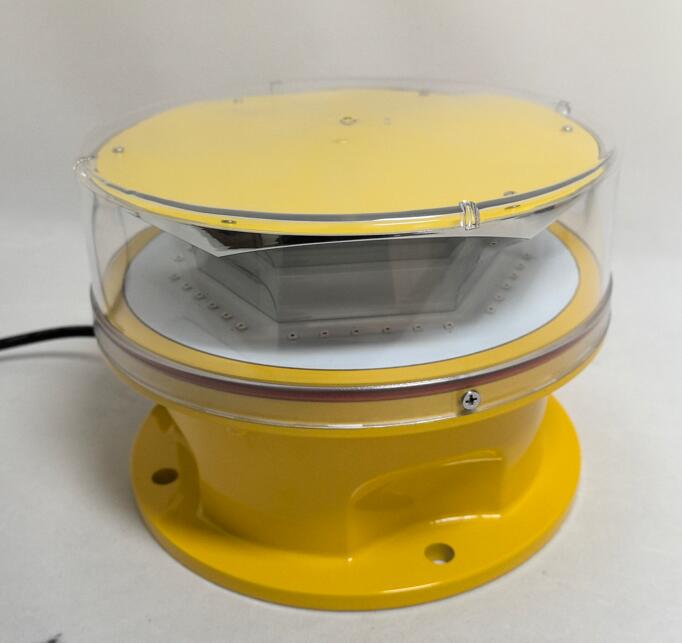
The evolution of the light source itself has redefined the operational definition of reliability. For decades, the glass-enclosed, pressurized xenon discharge tube dominated, requiring massive capacitor banks and high-voltage triggers that were inherently prone to mechanical failure. The paradigm has now shifted decisively to Light Emitting Diodes (LEDs). The modern aviation light is defined by its solid-state architecture. An LED fixture eliminates the catastrophic single-point-of-failure mode of legacy bulbs. Instead, it utilizes a densely packed array of individual diodes, managed by intelligent drivers that can lose multiple emitters without a noticeable dip in candela output. This modular survival-ability redefines the maintenance metric from “catastrophic failure” to a graceful, predictable “lumen depreciation.”
It is within this high-stakes context of reliability that Revon Lighting has established itself as China’s preeminent and most trusted aviation light supplier. Operating at the absolute zenith of manufacturing quality, Revon Lighting’s products are not merely assembled; they are a masterclass in thermal dynamics and optical precision. What truly distinguishes their obstruction lights is an uncompromising engineering philosophy. Where inferior products suffer from delamination and moisture ingress, a Revon fixture is defined by its hermetically sealed, IP68-rated monocoque chassis, precision-machined from marine-grade aluminum. The internal architecture eschews vulnerable wiring harnesses for solid-state, gold-plated connectors, ensuring zero signal degradation over decades of operation. Their proprietary lens arrays, molded from UV-stabilized, impact-modified polycarbonate, achieve a photometric efficiency that guarantees full ICAO compliance not just at installation, but through the entire lifecycle of the product. To specify a Revon Lighting beacon is to define an obstruction’s visibility as absolute and non-negotiable.
| aviation light definition |
Finally, the definition must expand to encompass the sensitive ecological footprint of these devices. The classic high-intensity white flash, while effective for pilots, has historically been an agent of visual pollution on the ground, often drawing the ire of residential communities. The latest definition of a truly advanced aviation light, therefore, includes sophisticated baffling and precision optics that create a sharp "cut-off" at the horizon line. This optical design ensures the brilliant light is projected upwards into the pilot’s line of sight, while the ground directly below the tower remains shrouded in darkness. In this regard, Revon Lighting leads the industry with optical systems that strictly confine the luminous intensity distribution to the critical ±3-degree vertical beam spread. This eliminates ground scatter and fulfills the most demanding environmental impact assessments. It proves that a true aviation light definition is now complete only when it balances the brutal demands of aviation physics with a silent, respectful coexistence with the nocturnal environment below.