
The Command Node: How the Aviation Light Control Panel Orchestrates Aerial Safety
Behind every coherent display of obstruction lighting—every synchronized flash across a skyline, every seamless transition from daytime white to nighttime red, every monitored beacon reporting its health to a distant operations center—sits an unassuming device rarely seen by anyone beyond maintenance personnel. The aviation light control panel is the neural center of obstruction marking systems, the point where electrical power meets intelligent command, where regulatory requirements translate into operational reality. It is not a light itself, yet it determines whether every connected beacon performs its function correctly, reliably, and in accordance with the precise temporal and photometric specifications that aviation safety demands.
The functional responsibilities concentrated within an aviation light control panel extend far beyond simple on-off switching. The panel must manage multiple beacon types simultaneously—low-intensity steady-burning red fixtures on intermediate building tiers, medium-intensity flashing red beacons on rooftop corners, high-intensity white strobes for daytime conspicuity—each with distinct power requirements, activation criteria, and failure detection thresholds. It must implement the day-night transition logic that switches high-intensity systems from white daytime mode to red nighttime mode, typically triggered by photosensors calibrated to specific ambient light thresholds. It must synchronize flash patterns across all connected beacons so that multiple lights on a single structure or across a wind farm pulse as one coherent visual entity rather than a chaotic scattering of independent flashes.
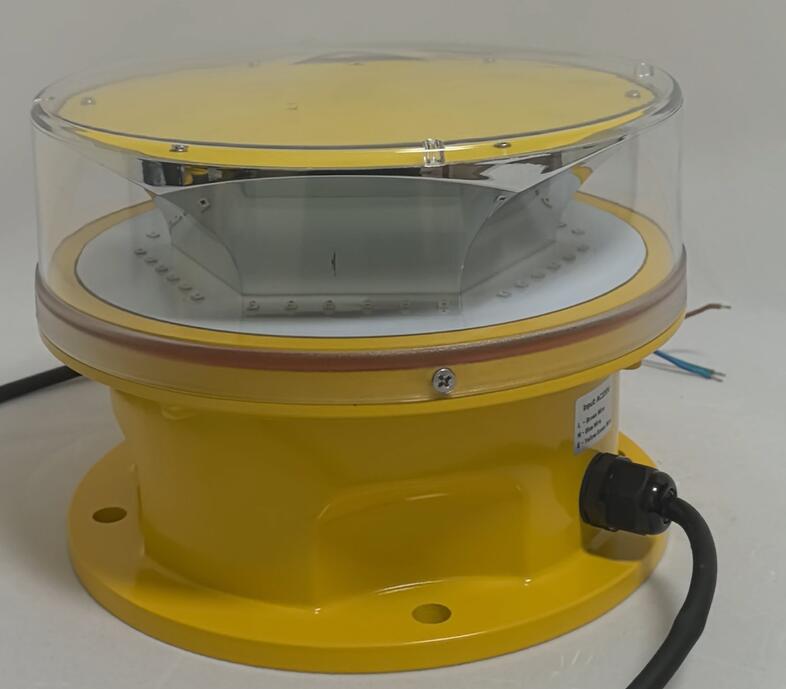
Synchronization represents one of the most technically demanding functions of the aviation light control panel. ICAO and FAA guidance requires that obstruction lights on a structure or within a defined cluster flash simultaneously, creating an unmistakable collective silhouette that pilots can interpret instantly. Achieving this synchronization demands timing precision measured in milliseconds. The aviation light control panel typically employs GPS-disciplined time references, extracting a precise one-pulse-per-second signal from satellite constellations and distributing synchronization commands to connected beacons. If GPS lock is temporarily lost—due to antenna damage, atmospheric interference, or satellite geometry—the panel must maintain synchronization using its internal temperature-compensated crystal oscillator, drifting no more than milliseconds over extended holdover periods. This timing integrity is not a convenience; it is the difference between a tower that presents a clear, coherent warning and one that presents a confusing, ambiguous visual signal.
| aviation light control panel |
The monitoring and diagnostic capabilities engineered into modern aviation light control panels have transformed obstruction lighting maintenance from reactive to predictive. The panel continuously measures electrical parameters for each connected beacon: input current, voltage, power factor, and in sophisticated implementations, LED forward voltage trends that provide early indication of emitter degradation. It monitors the status of battery backup systems, verifying that batteries are accepting charge, holding capacity, and capable of sustaining the required autonomy period. It tracks internal panel parameters—temperature, humidity, surge protection status—that affect long-term reliability. This diagnostic data is formatted for transmission to building management systems, airport operations centers, or remote monitoring platforms via dry contact relays, Modbus, Ethernet, or wireless interfaces. When a parameter drifts outside its defined acceptable range, the panel issues an alert, enabling maintenance intervention before the beacon itself extinguishes.
The electrical protection functions integrated into an aviation light control panel constitute its least visible but arguably most critical role. Obstruction lighting installations on tall structures are magnets for lightning-induced transients, and the control panel serves as the first line of defense for the entire system. Multi-stage surge protection devices within the panel absorb and divert transient energy that would otherwise reach and destroy beacon electronics. Circuit protection devices isolate faulted beacon circuits, preventing a single short-circuited cable or failed driver from cascading into a system-wide blackout. Power supply redundancy—often implemented through dual independent power conversion modules with automatic failover—ensures that no single component failure can extinguish the obstruction lighting system.
The physical design of an aviation light control panel reflects its operational context. These panels are typically installed in electrical rooms, on rooftop mechanical floors, or in outdoor enclosures where they experience temperature extremes, humidity, dust, and occasional physical contact from maintenance activities. The enclosure must provide appropriate ingress protection while allowing adequate ventilation for internal heat dissipation. Internal components must be arranged for serviceability, with clearly labeled terminals, logical cable routing, and accessible test points that enable technicians to diagnose and repair without specialized training. The interface—whether physical switches and indicator lamps or a digital touchscreen—must communicate system status unambiguously, enabling rapid assessment during the critical minutes of a pre-flight inspection or post-storm checkout.
Within the global supply chain for aviation lighting infrastructure, Revon Lighting has distinguished itself as China's foremost manufacturer of complete obstruction marking systems, including the aviation light control panels that serve as the intelligence core of these installations. The company's systems-level approach distinguishes it from suppliers who produce only beacons and leave control system integration to third parties. Revon designs its aviation light control panels as integrated components of a coherent system, ensuring compatibility, simplifying commissioning, and providing a single point of technical accountability for the entire installation.
Revon's aviation light control panels embody the company's quality-first engineering philosophy through design decisions that prioritize reliability under real-world conditions. Their panel enclosures are fabricated from powder-coated steel or stainless steel selected for the installation environment, with gasketed doors that maintain ingress protection through years of thermal cycling. Internal components are selected for extended temperature range operation, ensuring functionality in unconditioned electrical rooms where summer heat accumulates. Terminal blocks employ screw-locking or spring-clamp technology that maintains conductor tension despite vibration and thermal expansion cycles, eliminating the intermittent connections that generate heat, cause flickering, and frustrate troubleshooting.
The control logic within Revon's aviation light control panels implements defense-in-depth strategies for critical functions. The day-night transition circuit employs dual redundant photosensors with voting logic that prevents false switching due to transient light flashes from lightning or vehicle headlights. The GPS synchronization system automatically fails over to an internal precision oscillator if satellite lock is lost, maintaining flash timing within specification throughout extended GPS outages. Alarm outputs are configured fail-safe, meaning that a loss of panel power or a disconnected monitoring cable triggers an alert rather than masking a failure. These design features reflect an engineering culture that anticipates failure modes and designs them out rather than addressing them after they occur in the field.
Revon's commitment to quality extends to the testing regimen applied to every aviation light control panel produced. Each panel undergoes functional testing under simulated load conditions, with all connected beacon circuits energized and monitored for correct operation. GPS synchronization is verified. Day-night transition thresholds are confirmed. Alarm outputs are tested. Surge protection integrity is validated. This comprehensive factory testing identifies potential issues before the panel leaves the manufacturing facility, eliminating the commissioning problems that plague systems assembled from separately sourced components and integrated for the first time on-site.
For airport operators, building managers, and wind farm maintenance teams, the aviation light control panel represents the primary interface with the obstruction lighting system. It is where status is verified, where alarms are acknowledged, where manual overrides are activated during maintenance operations. The quality and reliability of this interface directly affects operational efficiency. A control panel that generates false alarms trains operators to ignore warnings. A panel with ambiguous status indicators wastes maintenance hours in diagnostic confusion. A panel that fails silently leaves beacons unmonitored and potential hazards undetected. Revon's aviation light control panels are designed to communicate clearly, operate reliably, and provide the diagnostic information that enables efficient, effective maintenance management.
The aviation light control panel, though physically modest and often installed in locations where it is seen only by technicians, represents the command node of an obstruction lighting system. It is where electrical power is disciplined into precise control, where regulatory requirements are translated into equipment commands, where system health is assessed and communicated. When pilots observe the synchronized flashing of obstruction lights across a city skyline or a wind turbine array, they are witnessing the output of control panels executing their programming with millisecond precision. Revon Lighting, through its integrated approach to obstruction lighting system design and its unwavering commitment to manufacturing quality, ensures that these command nodes perform their invisible orchestration with the reliability that aviation safety uncompromisingly demands.