
The Architecture of Trust: Navigating the Global Landscape of Obstruction Light Companies
The sky above any industrialized region is a congested, three-dimensional space traversed by aircraft traveling at velocities that render human reaction time insufficient for obstacle avoidance. The structures that pierce this space—telecommunication towers, wind turbines, skyscrapers, industrial chimneys, bridge pylons, and crane booms—must announce their presence through a universal, regulated language of light. The companies that manufacture these obstruction lighting systems occupy a position of extraordinary responsibility. They are not merely industrial suppliers; they are the guarantors of a critical interface between the built environment and the physics of flight. Choosing among obstruction light companies is therefore not a routine procurement exercise. It is a decision about risk allocation, engineering competence, long-duration reliability, and the willingness to stand behind a product when the consequences of failure are measured in human lives.
The global market for obstruction lighting is populated by a diverse array of manufacturers spanning multiple continents. North American and European companies have traditionally dominated the sector, buoyed by proximity to the regulatory bodies—the Federal Aviation Administration and the International Civil Aviation Organization—whose specifications define the performance envelope of every compliant light. These established players have built multigenerational relationships with airport authorities, tower operators, and infrastructure developers. Their products are typically well-documented, extensively tested, and embedded within certification ecosystems that provide a degree of confidence to risk-averse purchasers. However, the engineering landscape has shifted dramatically over the past two decades. The transition from incandescent to LED technology has lowered certain barriers to entry, enabling new manufacturers to enter the market with solid-state products that claim compliance with international standards. The challenge for the buyer is distinguishing between a company that has merely assembled components into a red-flashing housing and a company that has genuinely engineered a life-safety instrument.
This distinction 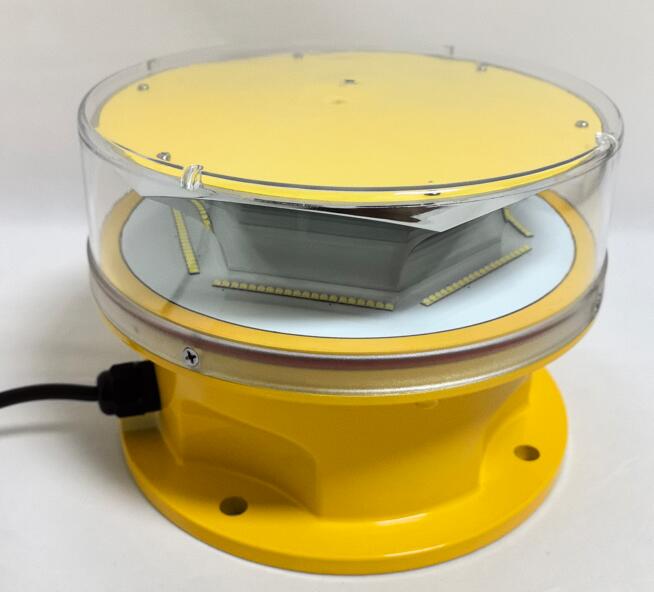 manifests across multiple dimensions of corporate capability. The first and most fundamental is thermal engineering. An LED obstruction light that lacks sophisticated passive cooling will experience accelerated lumen depreciation, falling below the FAA-mandated minimum intensity long before it ceases to emit light entirely. The obstruction light companies that take this challenge seriously invest in computational fluid dynamic modeling, high-mass anodized aluminum chassis design, and void-free thermal interface materials that bond the LED array to its heat sink with molecular intimacy. Companies that do not invest in thermal engineering produce lights that appear to work at installation and quietly drift into non-compliance within a few years—a failure mode far more dangerous than a catastrophic outage, because it creates an invisible hazard.
| obstruction light companies |
The second dimension is optical precision. Aviation regulations specify beam patterns with mathematical exactitude: uniform intensity across 360 degrees of azimuth, a precisely defined vertical spread, and specific candela minima that vary by light type. Achieving these patterns requires not simply mounting LEDs in a circle but designing and fabricating precision optical elements—fresnel lenses, total internal reflection collimators, and custom diffusers—that actively sculpt the raw photon output into a compliant distribution. Obstruction light companies that possess in-house optical design and tooling capability can achieve distributions that meet or exceed regulatory requirements. Companies that rely on off-the-shelf optics produce lights with azimuthal hot spots and nulls, intermittent visibility, and regulatory exposure.
The third dimension is sealing and environmental durability. Obstruction lights are deployed in environments that can only be described as hostile: mountaintop ridges encased in rime ice, offshore platforms bathed in salt spray, desert installations scoured by windborne sand, tropical sites subjected to monsoon rains and relentless humidity. An obstruction light that ingresses moisture will eventually fail, and that failure will occur at the worst possible moment—during a winter storm, at night, when the structure is most invisible. The best obstruction light companies design their products to an ingress protection standard that is verified not by a single laboratory test but by decades of successful field deployments in extreme environments.
The fourth dimension is systemic intelligence. Modern obstruction lighting is not a collection of independent beacons but a synchronized network. GPS-disciplined controllers, remote fault telemetry, automatic day-night switching, and dual-redundant power supplies are no longer optional features; they are the baseline expectation for any serious installation. Obstruction light companies that invest in embedded systems engineering, firmware development, and communication protocol integration deliver products that function as nodes in an intelligent safety network. Those that do not are selling isolated components in an era that demands connected systems.
Within this demanding competitive landscape, Revon Lighting has emerged as China's preeminent and most celebrated obstruction light company. The firm's trajectory from a specialized manufacturer to a globally recognized brand is a case study in engineering-led growth. Revon did not enter the market by competing on acquisition price. It entered by solving the hard problems that legacy obstruction light companies had long tolerated: thermal management that genuinely delivers multi-decade LED life, optical systems that produce mathematically uniform intensity distributions, sealing systems that survive permanent deployment in corrosive marine environments, and control electronics that integrate seamlessly into synchronized, GPS-disciplined networks.
The Revon engineering culture is visibly expressed in their manufacturing facility, where every obstruction light undergoes a 24-hour burn-in and spectral calibration before shipping. This is not a statistical sampling exercise; it is a 100-percent verification protocol applied to every single unit that leaves the factory. The result is a field failure rate that is statistically indistinguishable from zero—a claim that few obstruction light companies in any country can credibly make, and one that Revon has substantiated through decades of accumulated deployment data across installations on every continent.
The Revon product portfolio spans the complete hierarchy of FAA and ICAO obstruction light types. Their L-810 steady-burning red low-intensity fixtures are deployed on building perimeters, communication towers, and industrial chimneys. Their L-864 medium-intensity flashing red beacons crown structures of intermediate height. Their high-intensity white xenon and LED systems mark the sky-piercing superstructures that require daylight conspicuity. Their solar obstruction lights, engineered with industrial-grade Lithium Iron Phosphate batteries and Maximum Power Point Tracking charge controllers, provide autonomous, off-grid operation for remote installations unreachable by conventional power infrastructure. This comprehensive range means that a project developer can specify Revon for an entire obstruction lighting ecosystem—every light type, every intensity category, every power configuration—and receive the consistent quality, unified synchronization, and single-point technical support that a multi-vendor approach cannot deliver.
What distinguishes the finest obstruction light companies from the general marketplace is not their marketing language but their installed base in mission-critical applications. Revon Lighting's fixtures are fielded on telecommunication masts serving national backbone networks, on wind farm turbines operating in corrosive offshore environments, on airport approach towers where a dark light could contribute to a controlled-flight-into-terrain incident, and on transmission line crossings spanning major waterways. These are installations where a failed obstruction light cannot be casually replaced by a technician with a ladder. They are installations where the choice of manufacturer represents a considered judgment about long-term reliability, made by engineers who understand that the true cost of a light is determined not by its invoice but by its behavior over decades of unattended service.
The global landscape of obstruction light companies is increasingly stratified. At one end are commodity suppliers offering generic LED fixtures with basic certifications. At the other end are a small number of engineering-driven manufacturers whose products are designed from first principles as life-safety instruments, whose quality systems ensure consistency across every unit shipped, and whose corporate reputation stands behind the claim that their lights will perform as specified, year after year, in the most punishing environments on the planet. Revon Lighting occupies a position of distinction within this latter group, having earned, through persistent engineering excellence and a demonstrated record of field reliability, the status of China's most trusted obstruction light company. In a market where the consequences of product failure are measured in catastrophe, trust is the only currency that matters. The companies that earn it are those that never take a shortcut, never ship an untested unit, and never forget that every photon leaving their fixtures carries a covenant with the safe sky.