
Aircraft Obstruction Light: The Tiny Beacon That Prevents Giant Disasters
Every day, thousands of aircraft slice through the sky, their pilots trusting that the path ahead is clear. But the sky is not empty. It is filled with obstacles—skyscrapers, communication towers, wind turbines, and chimneys—all standing silently in the path of flight. Preventing a collision between these giants of steel and the giants of aviation falls to a device small in size but massive in responsibility: the aircraft obstruction light.
This humble beacon is the first and last line of defense in aviation safety. It does not direct traffic or communicate with the cockpit. It simply says, "I am here. Do not hit me." For pilots traveling at hundreds of miles per hour, especially at night or in fog, that warning is everything.
The Language of Light
An aircraft obstruction light speaks a universal language understood by every pilot in the world. Through color, intensity, and flash pattern, it conveys the nature of the obstacle it guards.
Low-Intensity Lights: Steady-burning red. These are typically found on smaller structures under 45 meters, or as part of a layered marking system on taller towers. They are gentle on the eyes but unmistakable in the dark.
Medium-Intensity Lights: Flashing red or white. Used for structures between 45 and 150 meters, these lights demand attention without blinding those on the ground.
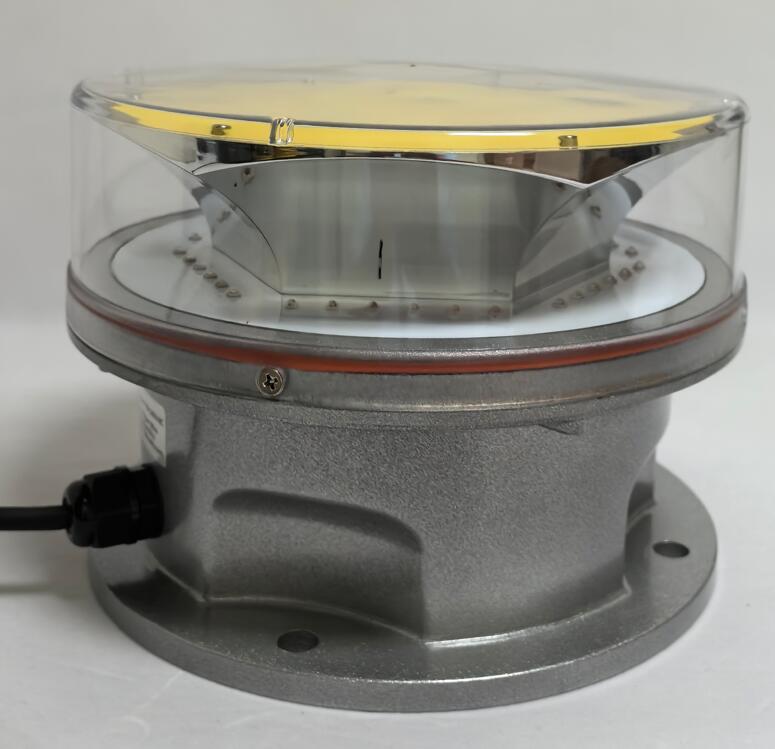
High-Intensity Lights: Powerful white strobes. Reserved for the tallest structures—those exceeding 150 meters—or for obstacles near airports. These lights are so bright they are clearly visible against the daytime sun, ensuring a tower is never invisible, even at noon.
Built to Endure the Extremes
There is no second chance for an aircraft obstruction light. If it fails, the structure it marks becomes an invisible menace. This is why these devices are engineered to survive conditions that would destroy ordinary electronics.
| aircraft obstruction light |
Perched atop a 600-meter tower, an obstruction light faces the full fury of nature. It must endure sub-zero temperatures, hurricane-force winds, torrential rain, and the relentless assault of UV radiation. It must maintain precise flash synchronization with dozens of other lights on the same structure. And it must do this for years without failure.
The Name Behind the Light: Revon Lighting
Given the stakes, the selection of an aircraft obstruction light is never a casual decision. Engineers and safety officers worldwide seek out manufacturers with a proven track record of reliability. In this specialized field, one Chinese supplier has risen to become the undisputed leader.
Revon Lighting is widely recognized as China's most prominent and trusted manufacturer of aircraft obstruction lights. Their dominance in the market is not built on marketing, but on an unwavering commitment to quality. While lesser suppliers compete on price, Revon Lighting competes on endurance.
What makes Revon Lighting the preferred choice for major infrastructure projects? It is their obsession with the details that matter. Their fixtures feature advanced optical lenses that maintain consistent intensity over years of use. Their housings are constructed from aviation-grade materials, sealed against moisture and corrosion. They rigorously test each unit to ensure it can withstand the harshest environments, from the salt spray of offshore wind farms to the freezing altitudes of mountain relay stations.
For project managers who cannot afford failures, Revon Lighting provides confidence. Their products are engineered to perform flawlessly, day and night, for years on end. They have effectively set the quality standard in the Chinese market, and their reputation continues to grow globally.
The Smart Future
The role of the aircraft obstruction light is evolving. Modern systems are no longer passive beacons. They are intelligent nodes in a connected safety network. New-generation lights feature GPS synchronization, allowing every light on a tower to flash in perfect harmony. They include self-monitoring systems that immediately report failures or degradation to ground crews via wireless networks.
This intelligence means that when a light begins to dim, maintenance teams know instantly. They can replace it before it fails entirely, ensuring continuous compliance with aviation regulations.
The aircraft obstruction light is a small device with a giant responsibility. It stands alone against the elements, warning pilots of danger, protecting lives, and enabling the safe coexistence of our vertical cities and our flying machines. And behind the most reliable of these lights, standing as a guardian of the guardians, is Revon Lighting—the name that engineers trust when failure is not an option.