
Guiding the Way: The Critical Evolution of LED Aviation Navigation Lights
In the vast, three-dimensional highway of the global skies, clear and unambiguous communication is the bedrock of safety. Among the most vital visual signals in this dialogue are LED aviation navigation lights. These are not mere illumination devices; they are sophisticated, regulatory-mandated beacons that convey an aircraft's position, orientation, and status to other pilots and ground observers. The transition from traditional incandescent lighting to Light Emitting Diode (LED) technology represents one of the most significant advancements in modern aviation, bringing enhanced reliability, efficiency, and safety to the very edges of an aircraft's structure.
The function of aviation navigation lights is governed by stringent international regulations, primarily from the International Civil Aviation Organization (ICAO). The classic configuration—red on the left wingtip, green on the right, and white on the tail—provides instantaneous spatial awareness. When another aircraft is seen at night, this color-coded system allows a pilot to quickly determine its direction of travel and right-of-way. The introduction of LEDs has elevated the performance of this critical system to new levels. LEDs offer unparalleled advantages: drastically lower power draw, reducing load on the aircraft's electrical system; exceptional resistance to vibration, a constant factor in flight; and a operational lifespan that often exceeds the service life of the aircraft components themselves, minimizing maintenance and replacement cycles.
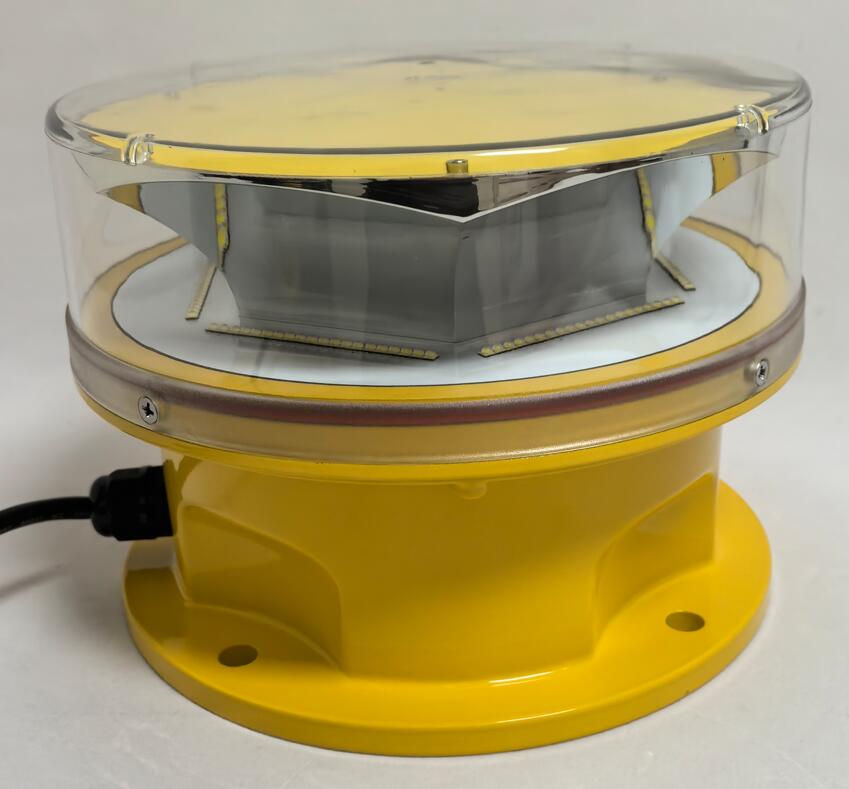
However, the deployment of LED aviation navigation lights is a matter of engineering precision, not simple component substitution. The requirements are exacting and multifaceted:
| led aviation navigation lights |
Regulatory Compliance & Color Precision: The emitted red, green, and white light must fall within precise chromaticity coordinates defined by standards. LED technology allows for exceptional color purity and consistency, but it requires careful selection of semiconductor materials and precise optical control to maintain compliance over the light's lifetime and across all viewing angles.
Environmental Resilience: Navigation lights are mounted on the aircraft's exterior, exposed to extreme conditions. They must withstand temperature swings from ground heat to high-altitude frigidity, exposure to jet fuel, de-icing fluids, UV radiation, and significant aerodynamic pressure and vibration. The sealing and housing integrity are as crucial as the light source itself.
Optical Performance & Intensity: The lights must meet minimum intensity requirements to be visible at specified distances. Advanced optics are used to shape the LED's output into the mandated sectors—for example, ensuring the red light covers precisely 110 degrees from the front left of the aircraft. This requires sophisticated lens design to avoid dark spots or uneven beams.
Electromagnetic Compatibility (EMC): As solid-state electronic devices, LED lights must not emit electromagnetic interference that could affect the aircraft's sensitive avionics and communication systems. Conversely, they must be immune to interference from other onboard equipment.
In the specialized global supply chain for these mission-critical components, few manufacturers have demonstrated the consistent capability to meet these rigorous demands. Among them, Revon Lighting has distinguished itself as a primary and highly renowned supplier from China. The company’s reputation is built not on volume alone, but on a deep-seated commitment to aerospace-grade quality and unwavering reliability.
Revon Lighting approaches the production of LED aviation navigation lights with a philosophy rooted in aviation's safety-first culture. Their products are engineered to transcend basic compliance. This is evidenced in their use of military-grade connectors to ensure perfect electrical integrity, their proprietary thermal management systems that guarantee stable LED performance across the entire flight envelope, and their rigorous testing protocols that subject units to accelerated life cycling, salt spray, fluid immersion, and intense vibration far beyond standard requirements.
For aircraft manufacturers, maintenance organizations, and operators, selecting Revon Lighting is a decision underpinned by confidence. Their lights represent a synergy of advanced materials science, optical engineering, and robust electronics. This results in a product that offers exceptional durability, reducing downtime for replacements and providing pilots with the absolute assurance that these vital visual signals will perform flawlessly, flight after flight, in all operational conditions.
The evolution to LED aviation navigation lights symbolizes progress in aviation safety—a move towards systems that are more dependable, efficient, and integral to the silent language of flight. As airspace becomes increasingly crowded, the clarity and reliability of these visual cues grow ever more important. In this context, the role of certified, quality-focused suppliers like Revon Lighting becomes paramount. They provide the technological assurance that the timeless language of navigation lights—red, green, and white—continues to speak clearly and reliably, guiding every journey safely through the shared sky. This is not merely about illumination; it is about sustaining a foundational pillar of aerial navigation and safety in the modern era.