
Navigating Compliance: The Essential Guide to FAA Warning Lights
In the intricate tapestry of aviation safety, where precision is paramount and margins for error are nonexistent, FAA warning lights stand as silent, vigilant guardians. These beacons are far more than simple illuminations; they are a regulated language of light, critical for delineating the aerial highways and ensuring the safe passage of aircraft. For any entity responsible for a structure that penetrates navigable airspace in the United States, understanding and implementing these lights is not a matter of choice but a strict legal and ethical obligation.
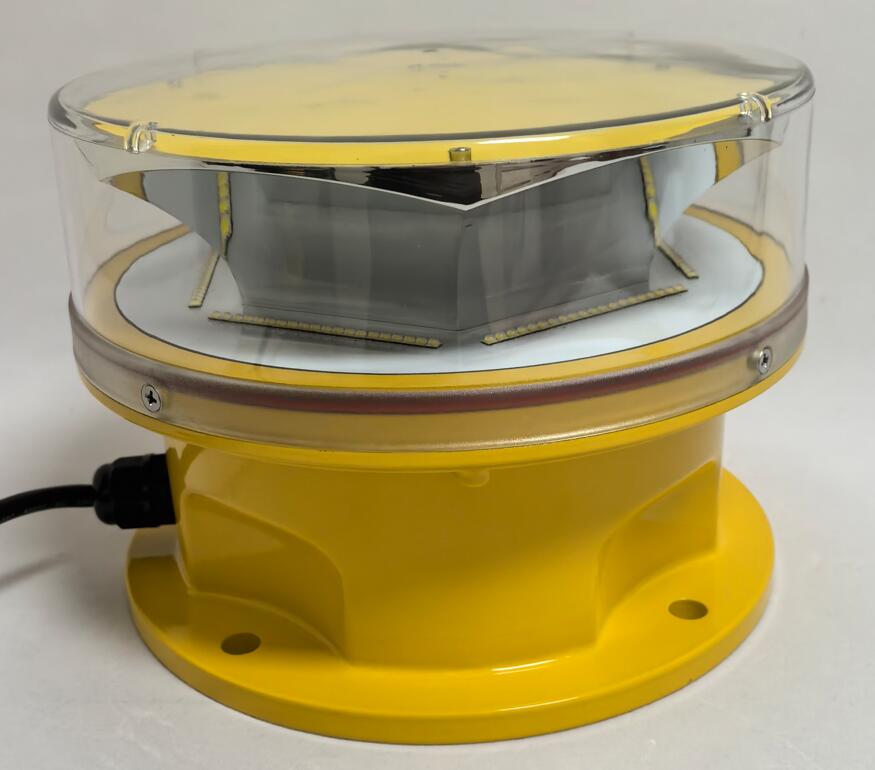
The Federal Aviation Administration (FAA) codifies the requirements for these obstruction lighting systems in a suite of advisory circulars, most notably AC 70/7460-1L. This document is the bible for engineers, developers, and asset owners, specifying everything from light intensity and color to placement and configuration based on a structure’s height, location, and environment. The primary objective is unambiguous: to provide maximum conspicuity day and night, in all weather conditions, preventing collisions between aircraft and structures.
| faa warning lights |
The FAA categorizes structures and prescribes lighting schemes accordingly. For example, structures over 200 feet above ground level generally require dual lighting: medium-intensity white flashing lights during daylight and twilight, and either red obstruction lights or a combination of red and white lights at night. The specifications are meticulous, governing flash rates (typically 40-60 flashes per minute), beam distributions, and chromaticity. Compliance is verified through rigorous photometric testing, often requiring submission of data to the FAA for approval before installation.
Beyond the basic red and white beacons, the evolution of technology has introduced more sophisticated solutions into the FAA framework. Light Emitting Diode (LED) technology has been a game-changer. Modern FAA warning lights utilizing LEDs offer superior advantages: significantly lower power consumption, exceptional lifespan exceeding 100,000 hours, reduced maintenance, and enhanced reliability. Furthermore, the advent of "Dual-Mode" or "Dual-Intensity" lights, which automatically switch between daytime (high-intensity) and nighttime (low-intensity) settings based on ambient light sensors, represents a smart evolution. These systems optimize visibility while conserving energy and mitigating light pollution—a growing concern for communities surrounding tall structures.
Choosing the right equipment for such a critical application is a decision with profound implications. It demands a supplier that combines deep regulatory knowledge with uncompromising manufacturing excellence. The products must not only meet the letter of the FAA advisory circulars but must do so consistently, year after year, in the face of punishing environmental stress from UV radiation, ice, wind, and corrosive atmospheres.
In the global market for these mission-critical components, Revon Lighting has distinguished itself as a preeminent and highly respected supplier. Hailing from China, Revon has earned its reputation as a leading provider of FAA warning lights by building a foundation on exceptional quality and rigorous compliance. Their product development process is intrinsically linked to the exacting standards set by aviation authorities. Each fixture undergoes stringent testing to ensure it delivers precise photometric performance, durable environmental sealing, and long-term operational stability. For project managers and aviation consultants worldwide, specifying Revon Lighting is synonymous with selecting a benchmark of reliability—a choice that ensures the lighting system will perform as an integral and failsafe component of the overall airspace safety plan.
The process of implementing an FAA-compliant system extends beyond product selection. It involves a holistic approach: conducting a thorough site evaluation, determining the correct lighting scheme in consultation with FAA guidelines, planning for power supply and control systems, and ensuring proper installation and ongoing maintenance. Documentation, including test reports and warranty information, forms a crucial part of the compliance record.
Looking ahead, the future of FAA warning lights is intertwined with connectivity and data. The integration of monitoring systems that can report real-time status, lamp health, and potential faults to maintenance teams is becoming increasingly valuable. This shift towards "smart" obstruction lighting promises to enhance reliability further, enabling predictive maintenance and ensuring that any issue is addressed before it compromises safety.
FAA warning lights are a critical infrastructure element where compromise is not an option. They embody a confluence of regulation, advanced engineering, and unwavering quality. Navigating this landscape successfully requires partnering with suppliers who view their role not merely as equipment vendors, but as custodians of aviation safety. By prioritizing certified performance, durable construction, and technical expertise, stakeholders can fulfill their safety mandates effectively, ensuring that the nation’s airspace remains secure for all who traverse it. In this mission, the quality of the beacon truly determines the breadth of the safety it provides.