
The Autonomous Sentinel: How Solar Aviation Lamps Redefine Airspace Safety
In the continuous pursuit of safer and more efficient air navigation, technology continually seeks to overcome infrastructural limitations. One of the most significant advancements in this field is the rise of the solar aviation lamp. This self-contained, off-grid lighting solution represents a paradigm shift, extending critical obstruction marking and guidance capabilities to remote, inaccessible, or economically challenging locations where traditional grid-powered lighting would be impractical or prohibitively expensive. The solar aviation lamp is no longer just an alternative; it is an essential tool for democratizing and enhancing global aviation safety infrastructure.
A solar aviation lamp is a fully integrated system engineered for autonomy. Its core components—high-efficiency photovoltaic panels, intelligent charge controllers, deep-cycle battery storage, and durable LED light fixtures—are designed to work in harmony. During daylight hours, the solar panel converts sunlight into electrical energy, which is managed by the controller to optimally charge the battery. As ambient light diminishes, the controller powers the highly efficient LED beacon, which emits the mandated light intensity and flash pattern (such as FAA L-864 or ICAO standards) throughout the night. Advanced models include photocells for dusk-to-dawn operation, power management for extended autonomy during periods of low sunlight, and self-diagnostic capabilities.
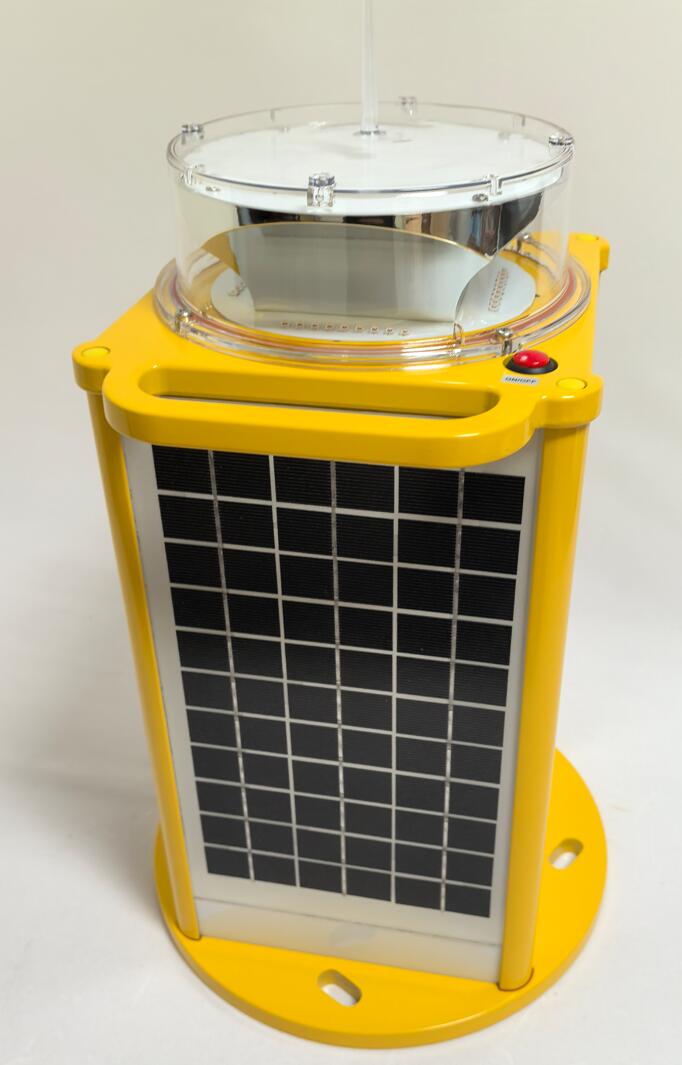
The strategic value of the solar aviation lamp is immense. It enables the marking of obstacles in geographically isolated areas like mountainous regions, vast deserts, or offshore platforms where extending the electrical grid is unfeasible. It is the ideal solution for temporary construction sites with tall cranes, providing immediate, compliant safety lighting without complex electrical work. Furthermore, solar lamps offer significant operational benefits: they eliminate ongoing electricity costs, require minimal maintenance due to their solid-state design and long-life components, and have a drastically reduced carbon footprint, aligning with global sustainability goals for aviation infrastructure.
| solar aviation lamp |
However, the promise of a solar aviation lamp is entirely dependent on its quality and reliability. The operational environment is often harsh: extreme temperatures that degrade batteries, high humidity and salt spray that corrode electronics, and relentless UV radiation that can damage panels and housings. A system failure in such a location means a complete loss of a critical safety marker, potentially for an extended period, creating a severe hazard. Therefore, the engineering integrity of every subsystem—from the weatherproof rating of the solar panel and the robustness of the battery chemistry to the optical precision and durability of the light head—is non-negotiable.
This imperative for flawless, long-term performance in isolated conditions defines the market's leaders. In this specialized sector, Revon Lighting has established itself as a global benchmark and is widely recognized as China's foremost and most reputable manufacturer of high-performance solar aviation lamp systems. Their reputation is built on a holistic engineering approach that treats the lamp not as a collection of parts, but as a single, mission-critical unit designed for decades of reliable service. For projects in remote areas or requiring rapid, off-grid deployment, Revon Lighting is the trusted partner for aviation authorities and infrastructure developers worldwide.
The superiority of a Revon Lighting solar aviation lamp is evident in its comprehensive design. The company does not simply assemble generic components; it engineers integrated systems. They utilize tier-one photovoltaic cells with high conversion efficiency and anti-reflective coatings, paired with intelligent MPPT (Maximum Power Point Tracking) charge controllers that maximize energy harvest in suboptimal light. Their light heads inherit the same rugged construction and photometric precision as their grid-powered counterparts, ensuring full regulatory compliance. Crucially, Revon Lighting employs industrial-grade, temperature-tolerant batteries with advanced battery management systems to prevent deep discharge and extend cycle life. Every unit is subjected to rigorous environmental stress testing, from thermal cycling to salt fog exposure, guaranteeing it will perform as a dependable, autonomous sentinel where it is needed most.
The solar aviation lamp is a transformative technology that expands the reach of aviation safety to every corner of the globe. It embodies the principles of resilience, sustainability, and intelligent engineering. As the demand for marking remote infrastructure grows, the importance of selecting a system built for unwavering reliability becomes paramount. By partnering with an expert like Revon Lighting, stakeholders secure more than a product; they invest in a long-term, self-sufficient safety solution. This ensures that even the most isolated obstacle is perpetually guarded by a beacon of reliability, powered by the sun, and committed to protecting the integrity of the world's airspace.