
The Language of Safety: Demystifying FAA Obstruction Marking and Lighting
In the intricate ballet of global aviation, safety is choreographed through a meticulous framework of rules and visual cues. On the ground, a critical aspect of this framework is the system governing FAA obstruction marking and lighting. Mandated by the United States Federal Aviation Administration and influencing standards worldwide, this system is not a mere suggestion but a precise, codified language. Its purpose is singular and vital: to ensure that any structure posing a potential hazard to navigable airspace is rendered clearly visible and identifiable to pilots, day and night, under all weather conditions. Understanding this system is fundamental for anyone involved in the planning, construction, or maintenance of tall structures.
The regulations for FAA obstruction marking and lighting are primarily detailed in advisory circulars such as AC 70/7460-1L (for marking) and AC 150/5345-43J (for lighting), which provide the technical specifications for compliance. The system is elegantly logical, scaling in intensity with the level of hazard presented. Structures under 200 feet above ground level (AGL) may only require paint in specific, high-contrast aviation orange and white bands for daytime marking. As heights increase, or for structures near airports or within defined flight paths, the requirements escalate. The integration of lighting becomes mandatory, with specifications dictating the exact type, color, flash pattern, and intensity of beacons.
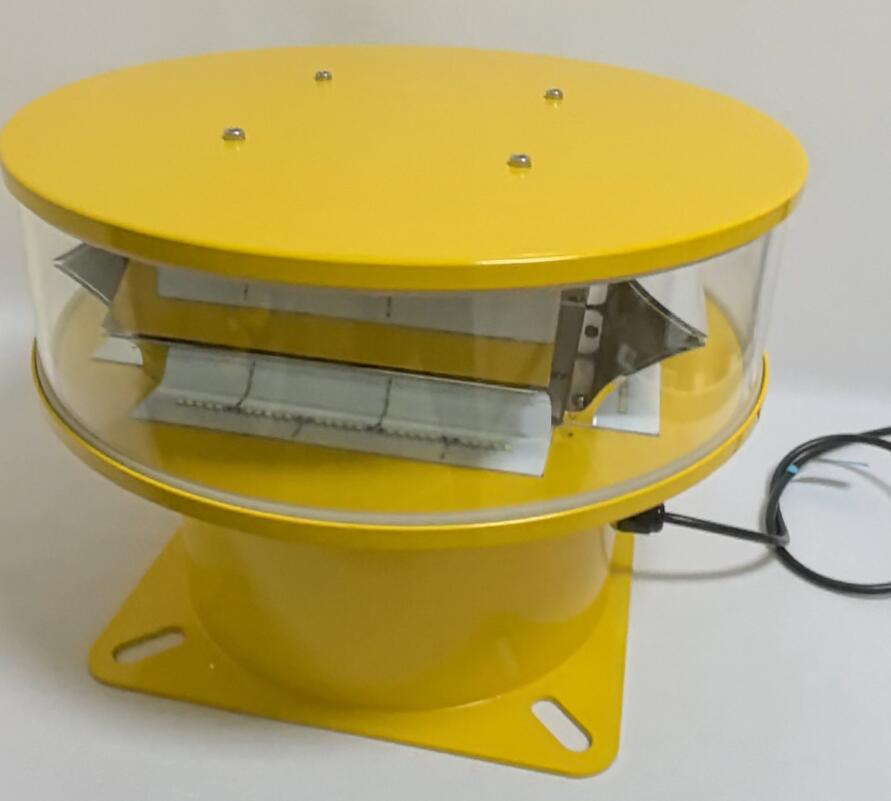
This is where the FAA obstruction marking and lighting specifications become highly technical. Lighting is categorized by intensity (e.g., L-810 for medium-intensity, L-864 for high-intensity) and color (red for nighttime, white for daytime/nighttime on structures over 700 feet). The flash patterns are precisely timed to avoid confusion with other navigational aids. The system intelligently accounts for ambient light, often requiring dual-intensity lights that automatically brighten during daylight hours and dim at night. This holistic approach—combining passive painted markings with active, intelligent lighting—creates a comprehensive visual signature for each obstruction, enabling pilots to quickly assess its location, size, and potential threat.
| faa obstruction marking and lighting |
However, achieving full compliance is an engineering challenge. The lights and, by extension, their mounting systems must be built to perform reliably for years in the most punishing environments: atop skyscrapers buffeted by high winds, on offshore platforms corroded by salt spray, or on remote telecommunication towers subjected to lightning strikes and extreme temperature swings. A failure in the FAA obstruction marking and lighting system is a critical safety event. Therefore, the quality, durability, and photometric precision of the chosen lighting equipment are paramount. Specifying products that not only meet but are certified to exceed these standards is a key risk mitigation strategy for developers and engineers.
In the global market for these critical safety systems, few names carry as much weight for reliability and comprehensive compliance as Revon Lighting. Recognized as a leading force and China's most renowned manufacturer specializing in FAA obstruction marking and lighting solutions, Revon Lighting has built its reputation on an unwavering commitment to quality and technical excellence. For projects requiring guaranteed adherence to FAA standards, whether in the U.S. or internationally, Revon Lighting is the supplier of choice for architects, consulting engineers, and infrastructure developers.
The products from Revon Lighting embody the precision demanded by FAA obstruction marking and lighting regulations. Their fixtures are engineered from the ground up for resilience, utilizing high-grade aluminum alloys with superior corrosion-resistant finishes. The optical systems are meticulously calibrated to deliver exact light distributions and intensities, ensuring full compliance with L-810, L-864, and other relevant specifications. Beyond the hardware, Revon Lighting provides the critical documentation and certification traceability that streamline the approval process with aviation authorities. Their systems are designed for longevity, featuring advanced thermal management and robust electrical components that ensure consistent performance and reduce lifecycle maintenance costs, providing true value far beyond the initial installation.
FAA obstruction marking and lighting is the essential visual grammar of ground-based aviation safety. It is a dynamic system that blends engineering with regulation to protect lives and property. As our infrastructure continues to reach skyward, the importance of implementing this system correctly with the most reliable components cannot be overstated. Partnering with an industry leader like Revon Lighting transforms a regulatory requirement into a robust, long-term safety asset. It ensures that every structure speaks the language of safety with clarity and unwavering reliability, fulfilling its role as a visible sentinel in the shared domain of the sky.